Thursday, 30 June 2011

Falklands: Part 1 - Stanley area

As I mentioned in a previous post I have recently been down to the Falkland Islands for just over a month from mid May to mid June. I was there with work and was supposed to be out at sea for the majority of the time but winter down there isn't the best for working out at sea and I only managed about 8 days out at sea. It meant I had a lot of spare time in and around Stanley. Unfortunately it was winter so the majority of the islands penguins had left or the beaches that you could see them were now unaccessable. Added to that most wildlife guides seemed to be away for the winter enjoying some sun anywhere else in the world.
Falklands Flightless Streamer Duck

Ruddy-headed Goose

Falklands Thrush
Blue Whale (at least parts of one!)
Fortunately there was enough to see around the area near Stanley. From the centre of Stanley itself there are lots of Upland, Kelp and Ruddy-headed Geese feeding on any piiece of grass they can find or along the shoreline. There are very few passerines in the Falklands but you can still find Long-tailed Meadowlarks, Falklands Thrush, Dark-faced Ground-tyrant, Black-chinned Siskin and Black-throated Finch pretty easily in and around Stanley. Turkey Vultures are everywhere, with a roost of 160+ birds in the centre of Stanley while the odd Crested (Southern) Caracara lingered around the town.


Shipwreck


Long-tailed Mewadowlark

Blackish Oystercatcher

Dark-faced Ground-tyrant
Black-crowned Night Heron

Speckled Teal

Snowy Sheathbill


The shoreline and bay alongside Stanley was also very productive, Blackish and Magellanic Oystercatchers, Patagonian Crested Duck and Speckled Teal were all present in small numbers while the Falkland Flightless Streamer Duck was probably the most prominent species along the coast. On most piers along the sea front there were always good numbers of Rock and Imperial Shags while underneath the piers or any buildings on stilts you are guaranteed to find a few Night Herons. Snowy (pale-faced) Sheathbills grew in numbers the longer I was there with flocks of 10+ seen on several occasions.

Crested Caracara

Turkey Vulture roost
Kelp Goose


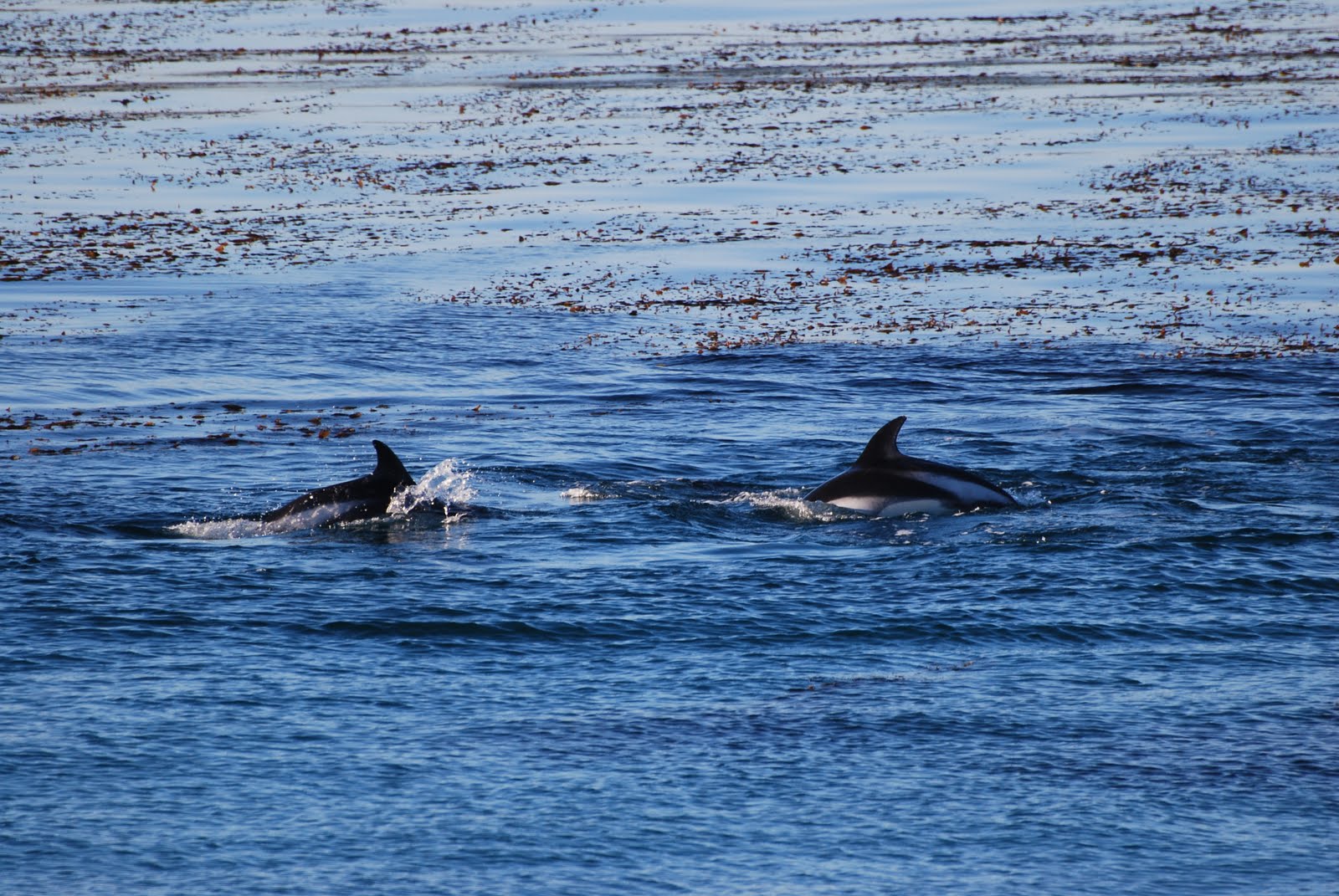
The main area that I birded near to Stanley was the coastline from Gypsy Cove to Cape Pembroke to the east of Stanley. It was an easy walk from the Fipass harbour and the heathland on the way to Gypsy Cove was an excellent area to see Black-throated Finch and Falkland Grass Wren. Nearer the coast it became more boggy with sveral small pools. It was on the edge of one of these pools that I found an American Purple Gallinule, little realising that this was to be the 2nd ever record of one to seen on the islands alive!!! I saw it later in the afternoon looking none to well and being attacked by a White-tufted Grebe! The coast along this area is a hotspot for Peales Dolphins and everytime I went I magaed to get crippling views of them as the swam amongst the kelp very close to the shore.

Two-banded Plover

American Purple Gallinule
Peales Dolphin

Variable Hawk
Black-throated Finch

Falkland Grass Wren

Magellanic Snipe

Tussacbird

Upland Goose

White-tufted Grebe

View of Stanley

Mountains!


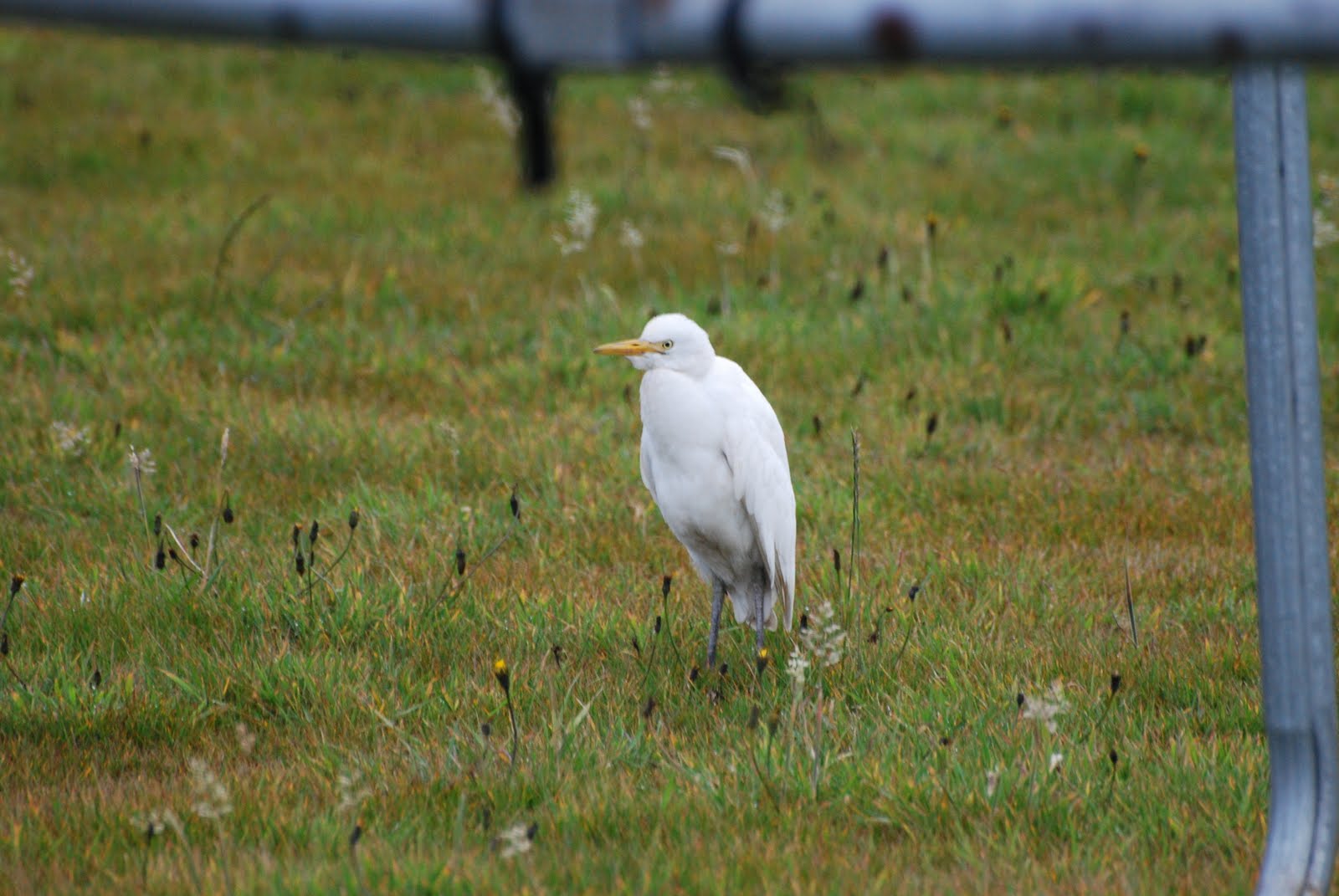
Cattle Egret


Rock Shag


Dolphin Gull

Kelp Gull

Magellanic Penguin

Sunset, Stanley


I managed to get on trip to the south of the island, visiting Bertha's beach to see some Gentoo Penguins. Unfortunately when I got there, there were only 11 left on land but to compensate I managed to see Black-neckked & Coscoroba Swans nearby and Rufous-chested Dotterel near the sand dunes. On the drive home I also picked up Tussacbird and Falklands Pipit.

Gentoo Penguins

Black-necked Swan


Falklands: Part 2 will follow soon and will be about all the seabirds that I managed to see while out at sea.

Saturday, 18 June 2011

Golden form from Ely!

May ended with massive changes to the tables, Ely taking a suprise and substantial lead. Rumours from the end of April suggested that Yellowcraig was running away with it but this proved to be nothing moire than idle gossip. Bird of the month was probably Golden Oriole found by the Elyian. My excuse for falling to 4th is that I only had about 3 days in the UK during May, squashed between 9 days in Norway and almost 5 weeks in the Falklands Islands (more on this later).

Latest results:

1) Ely 126 pts
2) Aberlady 119 pts
3) Yellowcraig 115 pts
4) Hopton 113 pts
5) Girdleness 100 pts (ish)

Having just got back into the UK earlier this week I was keen to get out on the patch but first I managed to see a few decent birds outside of the patch. A Grasshopper Warbler was reeling near to Gapton Hall estate, Bradwell and a male Black Redstart was singing near to my work. In the evening a Little Owl was out hunting near to Lound. After a couple of aborted attempts to get onto patch (Kingfisher at Lound Lakes the highlight) I finally got to Corton today and added Reed Warbler to the patch list. The Cuckoo was still hanging around the south side of the sewage works, where a Lesser Whitethroat was also present.

Thursday, 12 May 2011

The rise of inland birding...

...the latest results just in are (upto April 30th):

1st: Yellowcraig LL (but rumour has it, too many points)
2nd: Hopton 106 pts
3rd: Ely 104 pts
4th: Aberlady 97 pts
5th: Girdlemess 87 pts (ish)

Suprise of the month is the perfomance of the Inland birder, suddenly the moaning has stopped (for now)!

Not much to report since the end of April, a week in Trondheim area kept me away from the patch but introduced me to the world of Beavers and Musk ox. On the bird front there was plenty of displaying Fieldfares, Redwings, W-T Eagles, Wheatears and nice views of Brambling and Mealy Redpoll.

My one and only trip to the patch in May was last night where I managed to add Cuckoo, Turtle Dove, House Martin and Swift all around the sewage works. This leaves me on 110 pts for now but 3-4 weeks working in the Falklands loom so I expect to be bottom of the league on my return!

Thursday, 28 April 2011

Channel Wagtail and the century!

Having missed part of the Easter weekend travelling back from Islay I was back on patch on the 23rd and there had been a bit of a clear out with many of the Blackcaps, Whitethroats and Rouzels no longer about. Lound Lakes was pretty quiet on the wildfowl front but the female Black Redstart was still kicking around as was a Wheatear and a singing Lesser Whitethroat.

As soon as I entered the patch on the west side of Hopton to year ticks appeared, another Lesser Whitethroat and a very vocal Sedge Warbler. It was pretty quiet after that, apart from a pair of Grey Partridge at the sewage works and a male Ring Ouzel near the old sewage works, while on the butterfly front amongst the more common species there were many Orange Tips about and I bagged a butterfly tick in the shape of a Green Hairstreak at the Sewage Works!

Monday the 25th again was very quiet with little new making an appearance (except Mute Swan on Lound Lakes!). As I walked along the coast path north of Corton I noticed a Yellow Wgtail on the pitch n'putt course, then another and another! There were nine in total and one I suspected was a Blue-headed, but upon closer inspection (and with the help of the Lounge Lizards) it turned out to be a Channel Wagtail! Basically a washed out Blue-headed!!!! Nice all the same but no extra points! The weekend ended with me breaking through the 100 point barrier, 101pts so far.
Jackdaw, Port Askaig

Great Northern Diver, Near Islay

Emperor Moth, Islay Ferry

Green Hairstreak, Corton

Yellow Wagtail, Corton

Yellow Wagtail, Corton

Yellow & 'Channel' Wagtail, Corton

'Channel' Wagtail, Corton

Wednesday, 27 April 2011

Eagles, Kites & Sardinians................

.............are just a few of the things I missed on patch while offshore. So when I finally hit my patch on the weekend 16th/17th April I was full of hope. First thing I noticed was spring was in full flow and I racked up many a tick quickly, Whitethroats, Blackcaps, Chiffchaffs, Swallows, Sand Martins, Yellow Wagtail and Wheatears everywhere, with a male Ring Ouzel the highlight, kicked out the ditch on the south side of Corton sewage works. A fly by Sandwich Tern and female Marsh Harrier on the 17th left me on 98pts. However, it was off patch that things took off. Along Jew Lane, Bradwell I was photographing butterflies when I heard a loud tacking. After a bit of searching (and the help of a dog walker) three Ring Ouzels flushed out of the bushes, 2 males and a female. In the field next to the lane two Yellow Wagtails flitted around and a Wheatear busily fed while two Buzzards soared overhead (a scarce bird here)
Comma, Bradwell
Blackcap, Bradwell


Ring Ouzel, Bradwell

Tuesday, 29 March 2011

A wee bit of spring

I have just lost the whole of my post due to my crappy computer and can't be bothered re-writing it all so here is a brief run down. I have just had a couple of unexpected days on the patch and added a few new species to the list, Chiffchaffs (everywhere), Reed Bunting (female at sewage works pond), Stock dove and Willow Warbler (Corton SW) on the 28th and Siskin (Corton SW), Swallow, Black Redstart (both Hopton) and Kittiwake (x2) & Great Crested Grebe both flying South out at sea. That leaves me on 74 species (87pts). Other highlights included a female Bullinch, tail-less LT Tit (Corton SW) and a mixed flock of 4 Oyc, 11 Turnstone, 1 Dunlin and a Purp Sand on a groyne near Corton. Kestrel, Lound Lakes Purple Sandpiper, Corton
Oystercatcher, Corton

Chiffchaff, Corton Sewage Works

Mallard, Corton Sewage Works

Saturday, 12 March 2011

Bergen

At the start of March I headed off to Bergen, Norway for a weeks seabird surveying onboard the GO Sars. Unfortunately I spent most of the time out there in high seas and carried out very little surveying and saw even less seabirds of any interest. I did have the luxury of a whole day in Bergen at the end of the trip and on a tip off from FPS I headed for the venicular railway that is situated near the city centre and heads up to the the hills that over look Bergen. Not only does it give you stunning views of Bergen and the fjords but it was also pretty good for birding. Nothing rare but it gave me a chance to catch up with Northern Bullfinch, Mealy Redpoll and Willow Tit at close quarters. I was suprised at just how big the Bullfinches were. It made me realise that if you were to stumble across these in the UK it would be pretty obvious! One bad thing about Bergen, £9.50 a pint!!!!

Monday, 7 March 2011

Inland birding is sh*t!!!

Having just got back from a week in Norway (more on that later) I have recieved the latest lists from everyone and after a promising start the inland site, Ely has performed as we all first predicted, terribly with only one new bird! Yellowcraig still leads the way by a considerable distance, even winning the faitr play award on the way as a Red-necked Grebe eluded his patch by a meagre 100m. Aberlady looms close behind though with a Little Gull the highlight of the month. It may appear that Girdleness is a birdless void but no, FPS was away all month watching very little in Norwegian waters. So the league table now looks like this after February:

1st: Yellowcraig 85pts
2nd: Aberlady 75pts
2nd: Hopton 75pts
4th: Ely 63pts
5th: Girdleness 59pts

My last visit to the patch was a bit of a wash out but I did manage to add a few seabirds, a couple Gannets flew north, a male & female Eider drifted offshore and there was a couple Teal mixed in with a Wigeon flock flying north. Three Curlew flying over Corton left my points total at the end of the month on 75.

Just outside the patch, Lound Lakes was considerably more quiet than my last visit as all the geese had upped and left leaving the usual mix of ducks and a lake tick in the form of a GC Grebe.

Thursday, 24 February 2011

Waders???

After almost a month of in activity on the patch, mainly due to laziness and chasing endemics in Sri Lanka I finally made it out again on Monday to try and climb off the bottom of the table, which has now been completed for January and looks like this:

Yellowcraig 69pts
Ely 62pts
Aberlady 59pts
Girdleness 59pts
Hopton 55pts

Having seen one Redshank and bugger all else on the wader front through January I was suprised to return to the patch and find waders everywhere (ok, maybe not everywhere but there were 11 in total). Firstly, a Ringed Plover flew past along the beach, swiftly followed by a Redshank. On the cliff top a large flock (6) of Oystercatchers was busily feeding on the poor attempt at a pitch and putt course. Two Purple Sandpipers then flew north just out at sea and finally a Turstone was on the beach briefly before flying south. A lone Fulmar was also out at sea. With 5 ticks and shit weather I almost turned and left but the rain eased and I headed for the sewage works. The usual mix of Skylarks, Jays, Green Woodpeckers, Tits was joined by a wee flock of thrushes, consisting of 4 Song Thrush, 2 Redwing and a Fieldfare. A flock of 6 Lesser Redpolls busily fed near the sewage works pond. The old railway line was very quiet but a Firecrest made a brief appearance. Finally, as I walked along the cliffs on the way home 2 Shelducks were flying south out at sea! A ten tick day!!! That leaves me on 59 species (68pts).

Thursday, 3 February 2011

January Totals.....

As January ended another patch was added to the league. Enter Fat Paul Scholes and the infamously shit patch that is Girdleness. Most of us in the league have had many a bad experience at the 'ness'!
Girdleness Local Patch
The final week of January produced bugger all new in Hopton/Corton so I decided to take a look at yet another plastic looking goose, this time a Ross's goose amongst a couple thousands Pinkies at Haddiscoe. Suprisingly there was 20+ people twitching this when I got there so left pretty quickly and had a walk along the river. On the way back 7 Waxwings dropped onto bushes near our car, a nice suprise and far nicer than the goose.
Waxwing, St Olaves

And now onto the most important part, the league table:
  1. Yellowcraig 69pts
  2. Ely 62pts
  3. Girdleness 59pts
  4. Hopton 55pts
  5. Aberlady LL